Whitewater
Hyperreal© Whitewater is one shader that covers the whole water problem: the surface, the depth beneath it, and the view from below. Drop it on any mesh — a plane, a river spline, a bathtub — and it works out where the bottom is on its own. No volume to author, no second material, no setup scene.
Surface
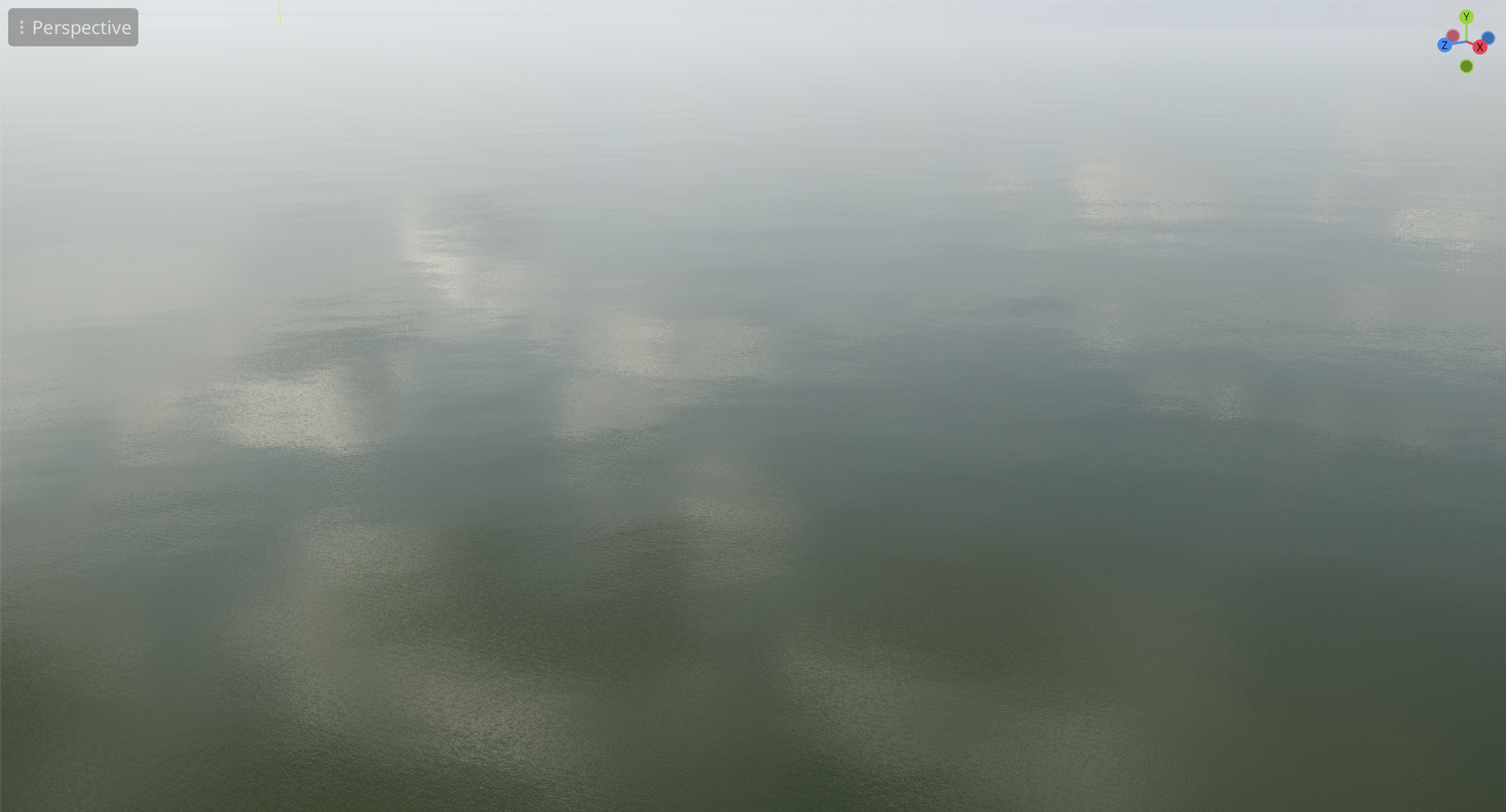
Four independent layers of motion stack into the surface — swell, ripples, and two grades of fine detail. Each has its own scale, speed and strength, so you can tune the silhouette of the water separately from its sparkle. One master speed drives them all when you just want the whole thing calmer or angrier.
Every layer takes your own textures, so the character of the water is yours to change. Tiling is broken up automatically — no visible repeat on a large body of water, at any distance.
Depth and colour
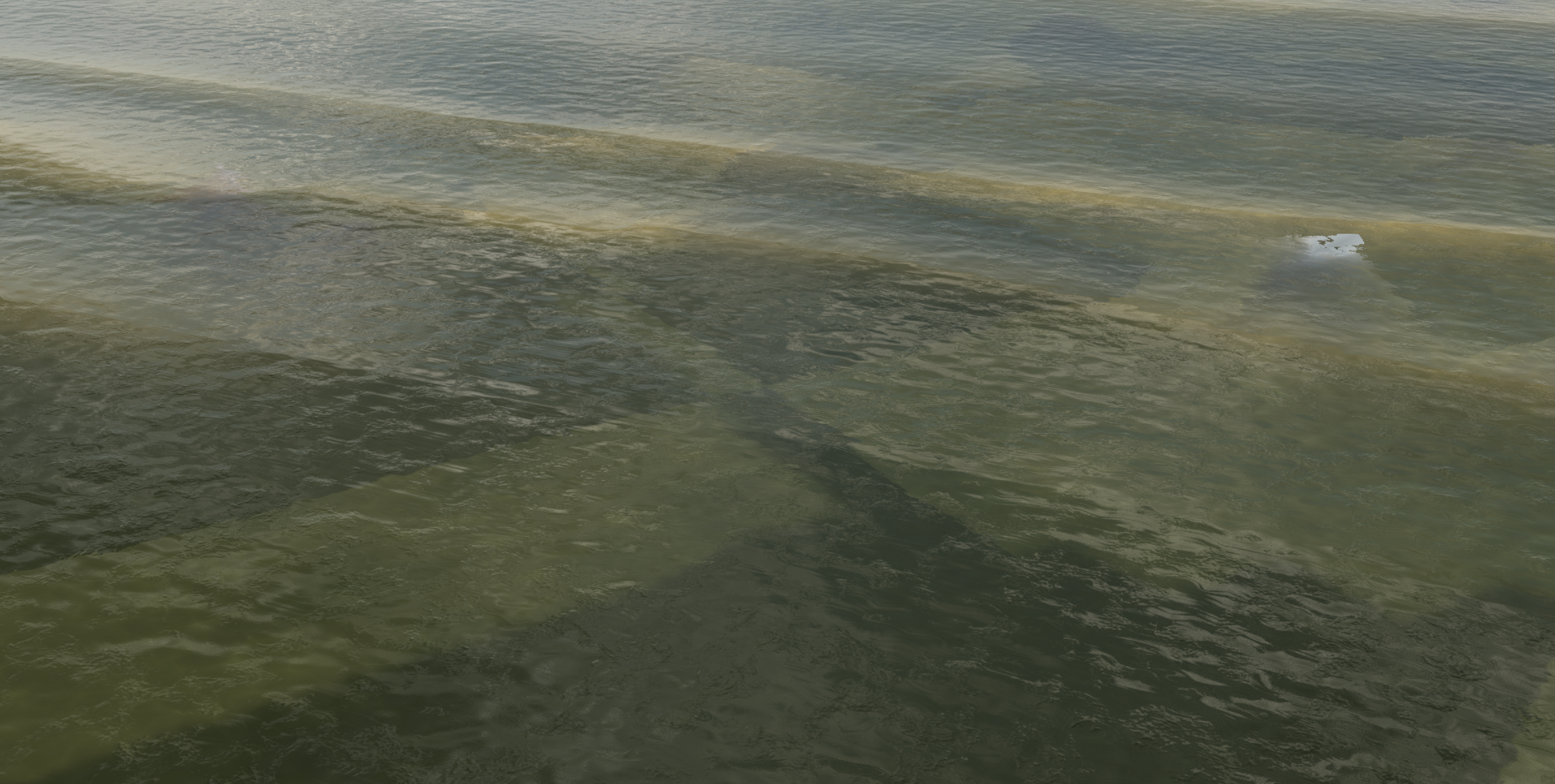
Water colour comes from how far light travels through it, not from a flat transparency setting. Shallows read warm and let the bottom through; the channel goes deep and opaque; the transition between them is continuous. You control how fast that happens, where it starts, and what colour the water absorbs toward.
Refraction bends whatever is behind the surface, and a distance fade keeps a large lake looking like water at the horizon instead of dissolving into shimmer.
Caustics and subsurface
Caustics play across whatever sits under the water, and they move with the surface rather than sliding against it — the single most common tell in a water shader. Scale, intensity and wobble are yours.
Subsurface scattering lights the backs of waves, which is what sells thickness on a crest with the sun behind it.
Underwater, out of the box
Cross the surface and you’re underwater. It’s the same material, with its own set of controls — nothing to script, nothing to trigger, no second shader to keep in sync.
- Colour absorption with distance — the reason deep water goes blue-green, tunable per channel.
- Its own depth falloff, tuned for looking outward rather than down.
- Caustics on everything around you, at their own intensity.
- Refractive warp across the whole view.
- God rays, with speed and density controls.
Built to be cheap
Whitewater is written to run on modest hardware, including the Mobile renderer. Work that can’t be seen isn’t done: detail that has no effect at distance is skipped, and effects fade out before they stop earning their cost. A single mesh renders correctly viewed from either side, so you don’t need a second one for the underside.
Water is a screen-space effect: cost scales with how much of the frame it covers, not with how large the body of water is.
Not included
So you know what you’re buying: no screen-space reflections, no simulated wave displacement, no wave-driven foam, and no impact or ripple-spawning system. Waves are texture-driven, which is what keeps them cheap and art-directable.